
The Shift to Trend Loyalty
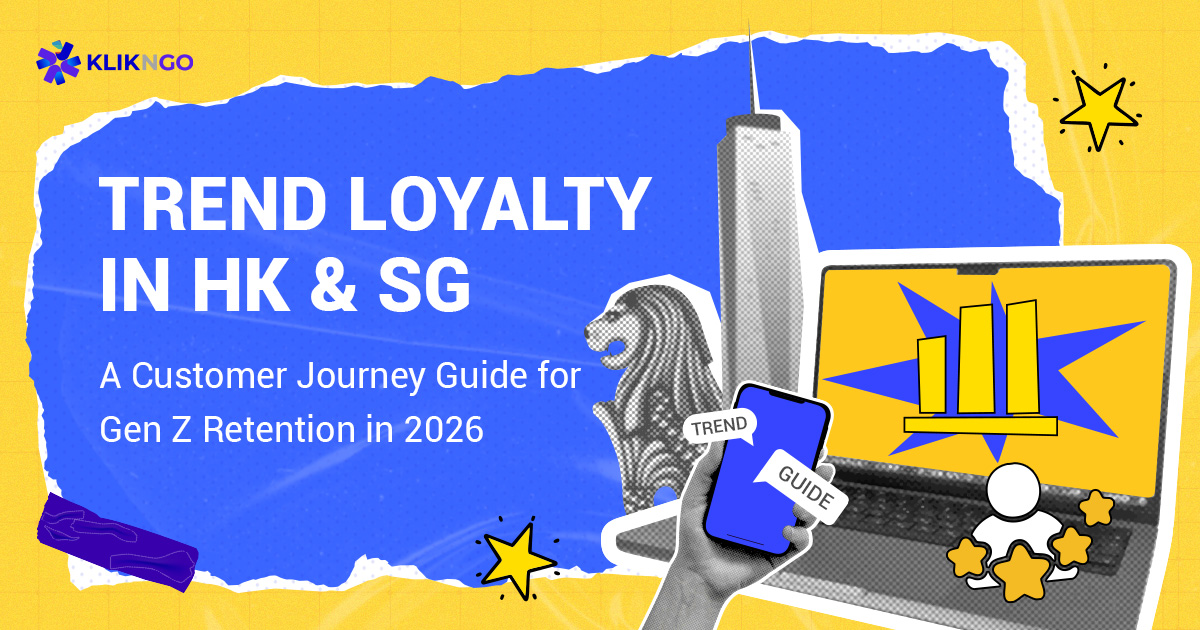
Gen Z loyalty is shifting from long-term brand devotion to trend loyalty, with products, trends, and creators shaping decisions more than brand names. In Hong Kong, Gen Z discovery is strongly social-led, according to a Marketing-Interactive (Lighthouse Independent Media) survey. In Singapore, Singapore Business Review reports Gen Z is the most likely group (57%) to buy products recommended by friends or influencers. This suggests loyalty is shaped by timely experiences, so the next touchpoint matters more than before.
For retail brands, retention is won by designing the Customer Journey so the next step is clear at key touchpoints. This is how Repeat Purchases grow, Customer Retention improves, and Loyalty Program ROI stays healthy. This guide shows how to do it with KlikNGo CRM and Customer Retention Automation.
Key Takeaways
- Retention is won at Customer Journey Touchpoints, not through one big campaign.
- Use Promotion to start the relationship, then use Reward Points and Membership to guide the next purchase.
- Use Omnichannel Marketing to keep the Customer Experience consistent across channels.
- Scale with Marketing Automation for Customer Retention, with strict frequency caps.
- Measure Repeat Purchases, Customer Retention, and Loyalty Program ROI (profit impact after reward cost).
The 2026 Mindset Shift: Retention Happens in Key Journey Touchpoints (Customer Experience First)
This shift explains why loyalty needs to feel immediate. If the next step is unclear, customers move on to the next trend. In retail, retention improves when the next step is easy and obvious.
Retail example: A shopper buys a trending item once, then stops. The next touchpoint must feel simple and timely. A short-window promotion, a reward points booster tied to that category, or membership early access to the next drop can pull them back for a second purchase. CRM connects these touchpoints so offers stay relevant without spamming.
Next, make each lever do one job so the journey stays simple.
Customer Journey Framework: Promotion, Reward Points, Membership + CRM (Each Has a Job)
A retail loyalty setup works best when the mechanics are easy to explain and easy to repeat.
Promotion is the spark.
Use promotion for first purchase or reactivation, and keep it time-boxed.
Retail example: “10% off first purchase, valid this weekend only.”
Reward points are the progress.
Make reward points feel fast and visible.
Retail example: “Earn 2× points if you return within 14 days,” or “Complete 2 purchases this month to unlock a bonus reward.”
This is the kind of points setup you can run in KlikNGo Loyalty Program.
Membership is the access.
Membership works best when it feels like access and convenience, not paperwork.
Retail example: “Members-only preview sale,” “Members get early access to limited drops,” or “Priority checkout during peak hours.”
This is easier to run consistently with membership management.
CRM is the connector.
A CRM links behavior to timing, so the right offer appears at the right moment. KlikNGo CRM brings these loyalty touchpoints into one system.
Now, make sure loyalty does not break when customers switch channels.

Omnichannel Marketing That Doesn’t Break the Customer Journey
Retail journeys are rarely single-channel. Customers browse online, check store availability, and buy in-store, or the reverse. If earning and redemption rules differ by channel, the experience feels broken and engagement drops. That is why Omnichannel Marketing matters.
Example: A customer sees a product online, checks store stock, buys in-store, and their points and perks update instantly. That “no channel switch feeling” is the core of a seamless omnichannel experience.
Touchpoint Map for Retail
Customer Journey Touchpoint | What Customers Expect | Best Lever | What KlikNGo CRM Enables | After the first purchase
| A clear reason to come back
| Bonus points or a limited-time perk
| Send a follow-up that matches their first purchase
|
|---|---|---|---|
Near their usual return time
| A timely reminder and a simple offer
| Category points or a limited-time offer
| Remind them at the right time based on their shopping pattern
|
When a product trend spikes
| Early access and urgency
| Membership early access
| Trigger messages to customers interested in that category
|
When a customer goes quiet
| One gentle nudge, not many messages
| Small winback perk with limits
| Set message limits and stop after one or two attempts
|
After omnichannel is stable, scale it with automation.
Scaling Trend Loyalty with Customer Retention Automation (Without Becoming Spammy)
Customer Retention Automation helps you run these touchpoints automatically, so the right message reaches the right customers at the right time. It works best when it stays simple and controlled.
Let’s start with three triggers:
- Post-purchase (48 to 72 hours): send one clear next step.
Example message: “Thanks for shopping. Come back within 7 days to earn 2× points.” - Near return time (7 to 21 days): send one reminder tied to what they bought or browsed.
Example message: “New arrivals this week. Enjoy a limited-time perk if you shop by Sunday.” - Quiet customer (30 to 45 days): send one winback, then stop if no response.
Example message: “A 48-hour perk is waiting for you. Tap to claim bonus points.”
Set simple rules that prevent spam. This protects Customer Experience and keeps Loyalty Program ROI under control:
- Cap frequency (example: max 1 to 2 loyalty messages per week)
- Stop conditions (if they buy again, stop the winback flow)
- Segment rules (don’t send winback perks to customers who already purchased recently)
To keep measurement simple, review a small KPI set monthly using loyalty program KPIs and metrics.
Conclusion: The HK & SG Trend Loyalty Checklist for 2026
In 2026, trend loyalty is built through a fast, consistent Customer Journey. Retail brands win when the experience is frictionless, benefits are timely, and loyalty stays consistent across channels.
Checklist:
- Define key touchpoints (first purchase, return window, trend drops, quiet customer).
- Assign roles: Promotion sparks action, Points create progress, Membership creates access, CRM connects timing and personalization.
- Keep Omnichannel Marketing consistent so the journey does not break.
- Scale with Customer Retention Automation, with strict frequency caps.
- Track Customer Retention and Loyalty Program ROI (profit impact after reward cost).
With KlikNGo Loyalty Management System, retail brands can measure what drives Gen Z repeat purchases in HK and SG.