
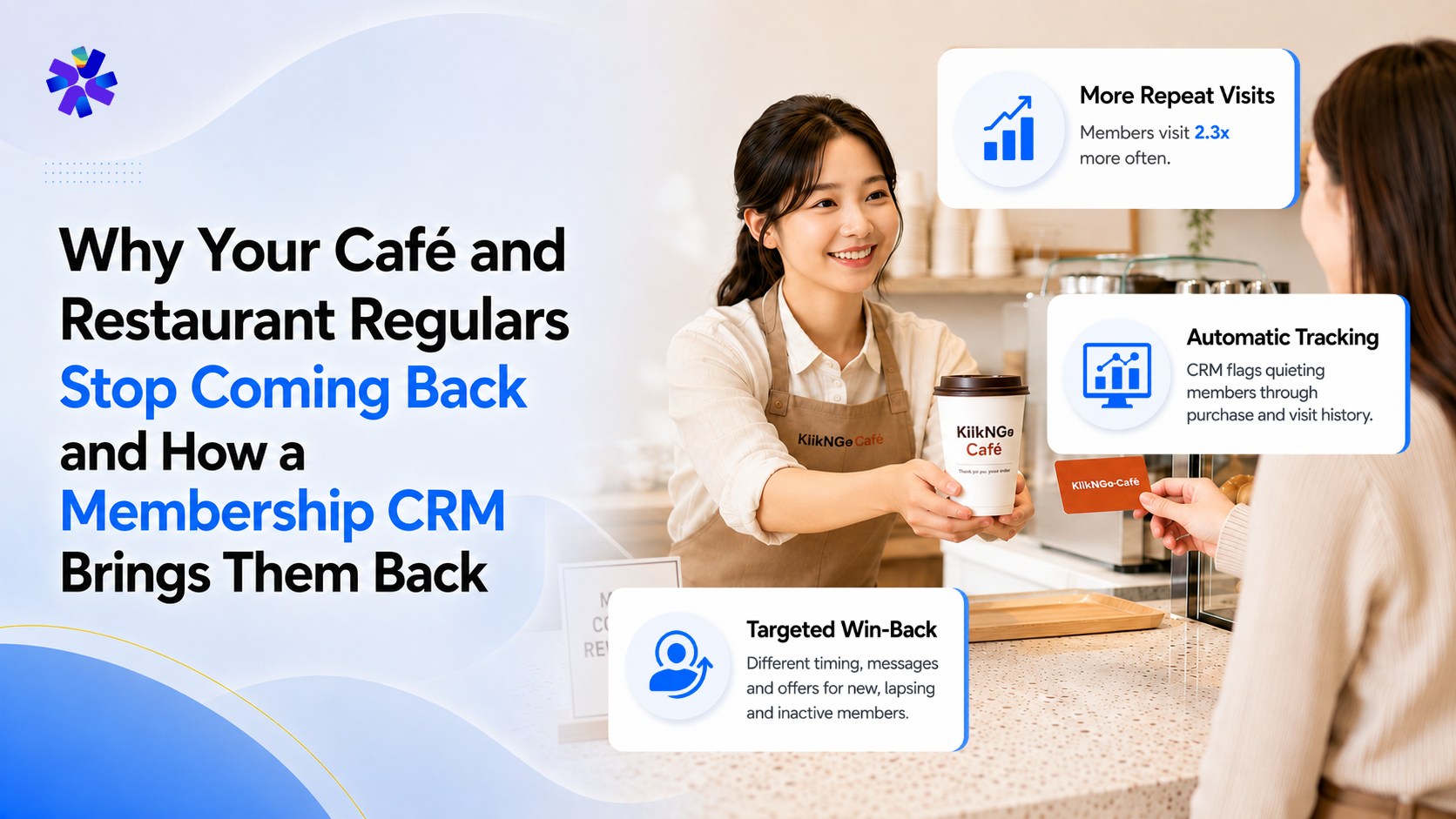


Café and restaurant regulars stop coming back mainly because nothing in the brand’s system tracks their absence and acts on it. A membership CRM solves this by tracking each customer’s visit pattern, purchase history, and reward usage, then triggering a specific response at each stage of lapse: a welcome voucher reminder for a new member who never redeemed, a personalised notification when visit frequency drops, and a targeted win-back offer before a high-spender fully disappears.
Key Takeaways
- Most diners who try a restaurant once never return. Closure data from Singapore and Hong Kong shows weak repeat visits are now a survival issue for F&B operators.
- Regulars lapse in three identifiable stages: no second visit after sign-up, a quiet decline in visit frequency, and a high-value customer going inactive with no signal until the data shows it.
- A membership CRM flags each stage automatically through purchase history and visit tracking, so you respond before the customer has fully gone quiet.
- CRM automation goes beyond scheduling blasts. The most effective triggers are behaviour-based: a welcome voucher unused after 7 days, a visit gap that exceeds a member’s own baseline, or a subscription benefit unredeemed before the cycle closes.
- Different member stages need different CRM responses: the trigger table shows how a new member who never redeemed, a lapsing regular, and an inactive high-spender each require a different timing, message, and offer to bring them back.
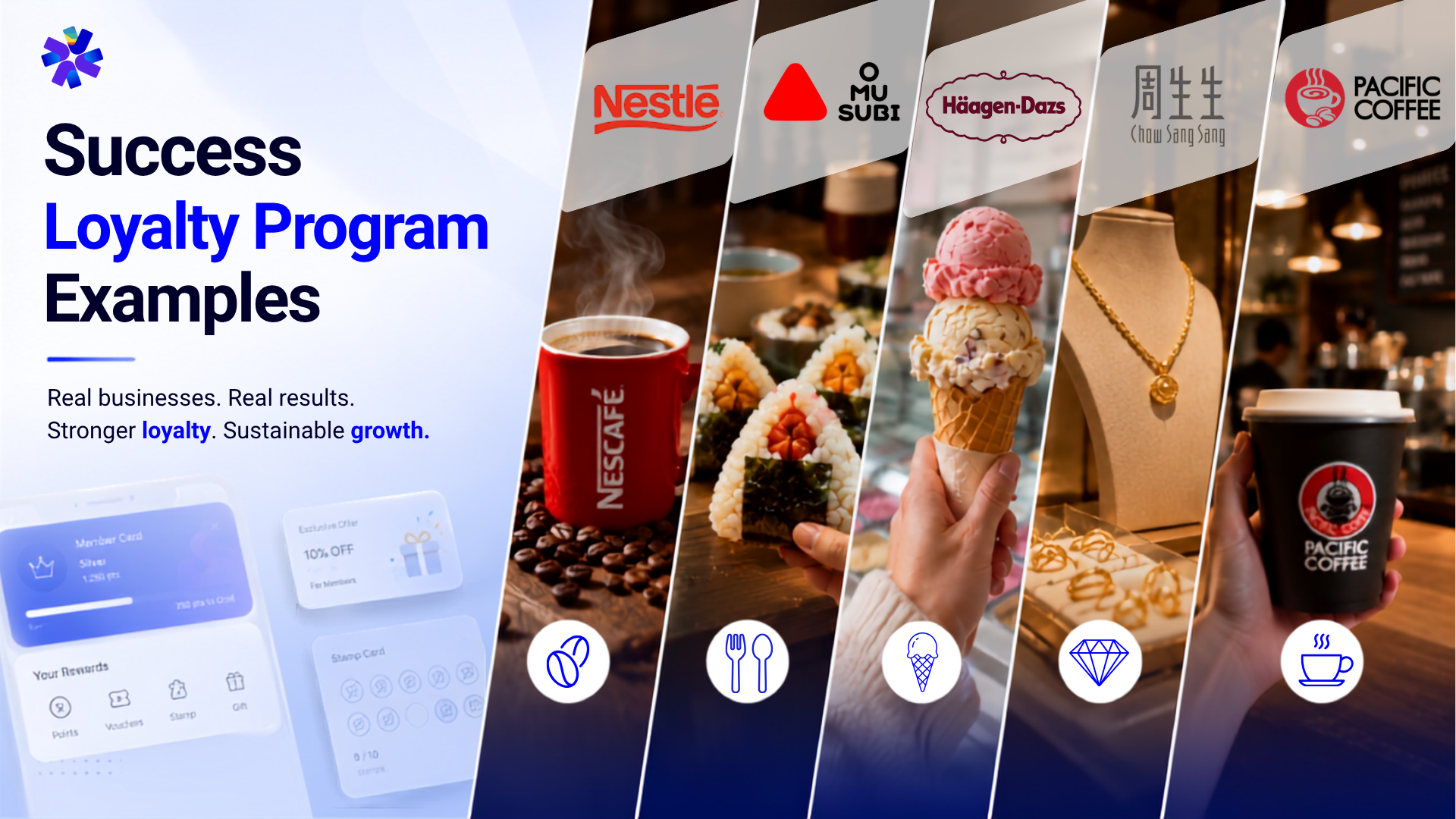
- Real-world results back this up: Pizza Hut HK reduced churn using RFM segmentation and 60-day inactivity triggers, Omusubi lifted single-basket value by 125% with behaviour-based missions, and Pacific Coffee recovered lapsing subscribers through redemption-window reminders.
Why 70% of Restaurant Customers Visit Once and Never Return?
A first-time visitor walking out your door and not coming back is the default outcome, not the exception. Industry research puts the figure at roughly 70% of first-time restaurant guests never returning, and a 2026 analysis of millions of guest profiles puts it even higher at 77.4%.
In Singapore, this is not abstract. Singapore’s Ministry of Trade and Industry reported an average of 307 F&B establishment closures a month in 2025, up from 254 a month in 2024. A separate MTI parliamentary reply confirmed 2,431 outlets shut between January and October 2025 alone. Hong Kong faces a similar pressure pattern: closures have started to outpace new openings.
Membership CRM platforms exist because acquisition alone cannot carry an F&B business. If most of your marketing budget goes toward first-timers and most first-timers never return, you are funding a business that resets to zero every month. The KlikNGo loyalty program CRM is built specifically for this problem: turning the customer data you already have into repeat visits.
The Real Reasons Your Regulars Go Quiet
That fade usually happens quietly. When a regular disappears, most owners assume something went wrong on a visit. In practice, the food and service are rarely the cause. Customers go quiet because nothing in their week reminds them you exist.
A Reelo industry analysis found that 89% of restaurants are losing customers to competitors who simply remember their preferences better. The pattern repeats consistently: a first-timer leaves with no follow-up and forgets the brand exists, a regular’s visits quietly thin out with no trigger to bring them back, or a welcome discount runs out before a real habit forms.
None of this shows up on a feedback form because the customer is not unhappy. They simply stopped thinking about you, which is harder to notice and easier to fix once you can see it in the data.
How a Membership CRM Tracks Behaviour and Triggers the Right Response
Triggering an automated message is just the surface mechanic. What makes a membership CRM genuinely useful is knowing which behaviour to act on and matching the right reward type to the right stage. Sending a win-back discount to a member who just signed up wastes margin and trains them to expect a deal before every visit. Sending a generic points reminder to someone inactive for 90 days is too low-stakes to move them.
That distinction only becomes possible when the system can see what each member has actually done. The KlikNGo membership management system tracks these signals in real time across your full member base. Below are the core behaviour triggers and the CRM response each one should fire.
Behaviour-Based CRM Trigger Logic
Member Behaviour | Stage | CRM Trigger Condition | Reward / Action |
|---|---|---|---|
New member registered but never redeemed welcome voucher
| Onboarding
| 7 days post-signup, no redemption detected
| Voucher reminder: ‘Your welcome reward expires in 7 days’
|
Item added to cart but checkout not completed
| Onboarding / Active
| 7 days after cart abandonment, no purchase
| Checkout reminder + 5% off voucher
|
First-time visitor, no second visit
| Lapse Risk
| 14 to 30 days no activity after first transaction
| Brand reminder + first-return reward
|
Regular customer visiting less often than their own baseline
| Frequency Decline
| Visit gap exceeds 1.5x the member’s own average frequency
| Personalised notification referencing usual order or favourite item
|
Subscription member has not redeemed monthly benefit
| Active / Retention
| Fewer than 3 days before subscription period ends, no redemption recorded | Expiry reminder: ‘Your 3 drinks expire this Sunday’
|
High-spender inactive for 60+ days
| Win-Back
| No transaction for 60 days, above-average historical spend
| Win-back offer tied to past favourites, not a generic discount |
Member birthday approaching
| Retention / Delight | 7 days before birthday date on file
| Birthday reward: free item, bonus points, or exclusive offer
|
The key distinction: The trigger is behaviour detected in real time, not a calendar date you chose. A member who claimed a welcome voucher but never used it is not the same as one who never claimed it at all. Each group needs a different message because they are at a different point in their decision to return. That said, the system can only act on what it can see — knowing which signals are worth monitoring, and which member groups carry the most recovery value, is the prior step.
How to Know Which Customers Are About to Stop Coming
The trigger table covers seven behaviour types, but not all carry equal recovery value. Some like voucher reminders, subscription nudges, and birthday rewards are time-bound by nature, so the CRM fires them based on a date or deadline already in the system. The three segments below are different. None of them come with a built-in expiry, which is exactly why most operators miss them: a one-time visitor, a regular visiting less often, and a high-spender who has gone quiet all look fine on the surface until the data shows otherwise.
1. Customers who visited once and disappeared
This group is the largest and the easiest to miss, because on paper they are still ‘members.’ A membership CRM can flag anyone who signed up or transacted once and has had zero activity since, typically within a 14 to 30-day window, so they can be re-engaged before the memory of the visit fades.
2. Regulars who are quietly visiting less often
This is the group most operators discover too late. A customer who used to visit weekly and now visits monthly has not churned yet, but the trend is clear in their visit frequency data well before they vanish. The CRM should compare each member’s current visit gap against their own historical baseline, not against a fixed schedule applied to everyone. A weekly regular gets flagged at 14 days of absence. A monthly regular does not get flagged until 45.
3. High-spenders who have not been in for 60 days
This is the highest-value group to monitor and the easiest to lose without noticing. A customer who regularly spent above average and then went quiet for 60 days is statistically unlikely to return without a direct prompt. They have had two months to settle into a different routine. Treat this group separately from generic lapsed members: the offer, the tone, and the timing should all reflect their past value to the business.
Case Studies: What This Looks Like When It Works
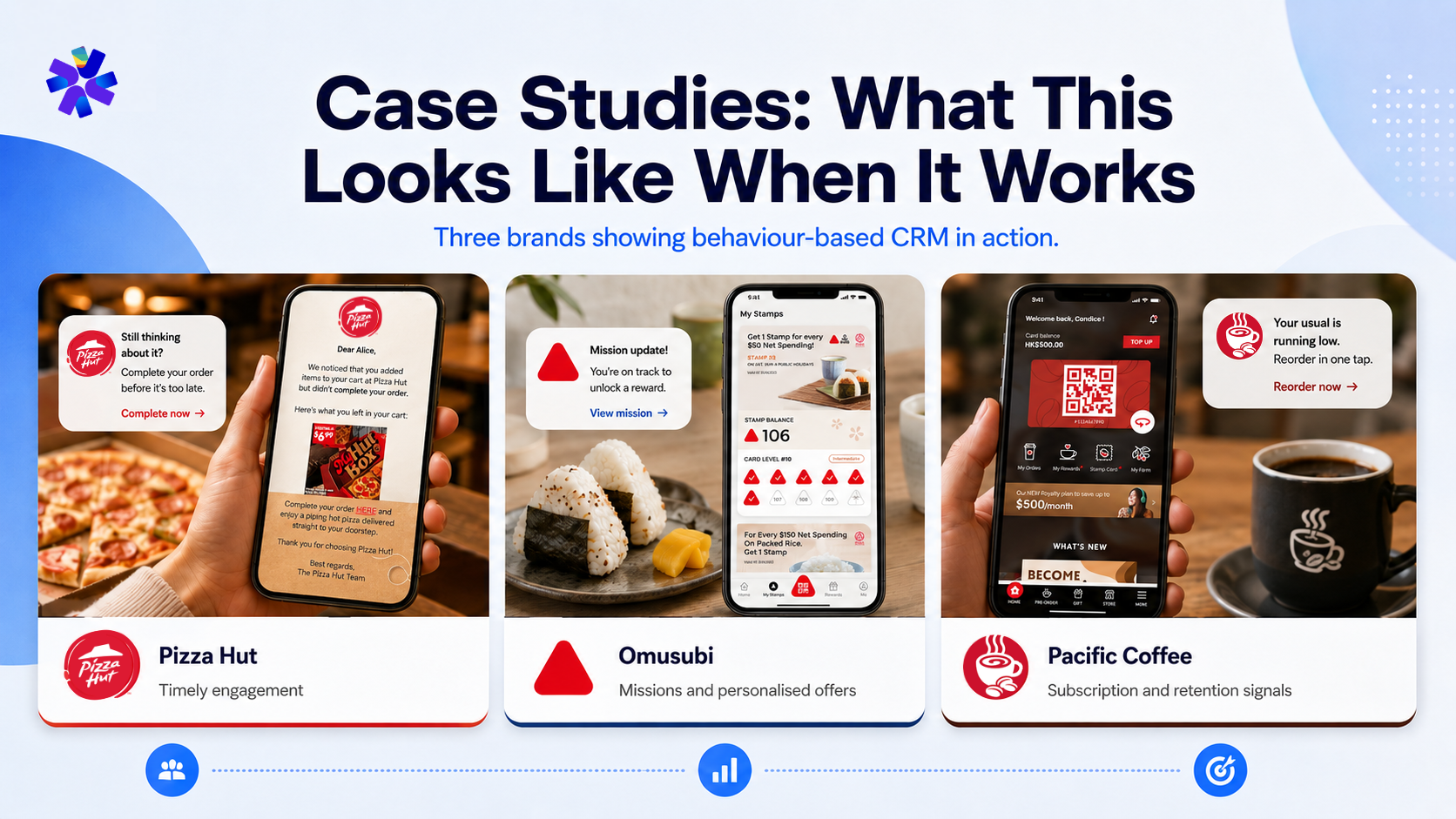
The following cases show what behaviour-based CRM looks like once it is running.
1. Pizza Hut Hong Kong — RFM Segmentation & Behaviour-Triggered Messaging
Pizza Hut Hong Kong faced declining sales and fragmented customer data following the 2019 social movement protests. KlikNGo built a data warehouse from multiple sources and applied RFM segmentation across three years of transaction history, then used those segments to deliver personalized messages across email, SMS, and in-app channels based on each customer’s meal preferences, order times, and party size.
The behaviour-based logic extended to two specific triggers: a 60-day inactivity window that fired automated re-engagement campaigns before customers lapsed, and a separate EDM sequence targeting the more than 30% of new members who signed up without making a first purchase. Both triggers escalated in intensity over time rather than sending a single broadcast. Within six months, the program produced measurable lifts in click-through rate, open rate, and sales conversion.
2. Omusubi — Gamification and a Referral System
Omusubi Hong Kong previously ran a stamp-based program and struggled to retain customers between visits. KlikNGo replaced it with daily check-in missions, group-dining challenges, and AI-personalised coupons tailored to each customer’s spending pattern. The result was a 125% increase in single-basket value and an average of 40,000 new users gained per month during the campaign period.
The shift was not a bigger discount. It was replacing a static reward with missions and personalized offers that gave the brand more behaviour signals to act on: check-ins, mission progress, referrals, spending patterns, and coupon response rates, each feeding back into the segmentation logic so future messages stay relevant.
3. Pacific Coffee Hong Kong — Subscription Loyalty Built on Visit Data
Pacific Coffee’s previous loyalty program was not engaging younger customers, and the brand needed to migrate years of existing points and wallet balances into a new system. KlikNGo built a subscription membership with an eWallet and a personalized reorder list showing each customer’s usual order.
Since the subscription runs on a monthly cycle, the CRM can detect subscribers who have not redeemed their drinks before the period closes. That detection fires a timely reminder rather than a generic promotion. The message is based on real subscription and redemption behaviour. The result was a meaningful lift in membership sign-ups, paid subscriptions, and revenue, alongside far clearer visibility into which customers were actually using their membership.
Action Plan
Regulars leave when the brand stops appearing in their routine. Start by identifying the signals: no second visit, longer visit gaps, unredeemed vouchers, and inactive high-spenders. Then connect each signal to a behaviour-specific automated follow-up instead of sending the same promotion to everyone on a fixed schedule.
You can see how the rewards, gift cards, and membership tiers look from the customer’s side in KlikNGo’s café standard website demo, or explore the full loyalty experience walkthrough covering points, stamps, and redemption end to end. To see how a simplified, lightweight café membership looks in practice, explore the KlikNGo café mini-app demo.
FAQ: Café and Restaurant Customer Retention & Membership CRM
How long should I wait before considering a customer lapsed?
This depends on your typical visit frequency. A cafe with weekly regulars might define lapsed as 30 days of inactivity, while a destination restaurant visited monthly might use 90 days. A useful starting benchmark is 60 days for most F&B concepts, then adjust once you can see your own customers’ actual visit patterns in the CRM data.
What is the difference between scheduling a campaign and behaviour-triggered automation?
A scheduled campaign goes out on a date you set, to a segment you defined manually. Behaviour-triggered automation fires when the system detects a specific customer action, or a specific absence of one, such as a voucher unclaimed after 7 days or a visit gap that exceeds the member’s own baseline. The trigger is the customer’s behaviour, not your calendar.
Does a membership CRM only help large restaurant chains?
No. Single-outlet cafés and independent restaurants benefit just as much, since they typically have fewer customers to track manually, which makes automated segmentation more valuable relative to the effort it saves. KlikNGo is built to serve both single-outlet operators and multi-location chains.
What is the difference between a loyalty program and a membership CRM?
A loyalty program is the rewards mechanic customers see, such as points reward or e-stamps. A membership CRM is the underlying system that tracks purchase history, visit frequency, and customer segmentation behind that program, and triggers the right action automatically.
How do I know if my current loyalty program is retaining customers?
Total member count can be misleading. A program may have 10,000 registered members, but if 70% of them have not purchased again in the past 60 days, the size of the database does not mean much. The more important numbers are visit frequency, voucher redemption rate, and how many members become repeat buyers instead of one-time customers.
If visit frequency is flat or falling while sign-ups are growing, the loyalty program is adding members but not changing behaviour. If voucher redemption is low, the rewards may not be strong enough to bring customers back. If many members only have one transaction, the issue is onboarding, not loyalty. A membership CRM helps track these signals in one place, so brands can see whether members are still active months after joining, not just how many people signed up.