



An aesthetic clinic manages prepaid packages by tracking two separate balances, session-based packages and monetary treatment credit, alongside membership tier status, in one system, so staff can confirm what a client purchased, used and still has available before every redemption.
Key Takeaways
- Session packages track treatment units; treatment credit tracks a monetary balance. They should never be recorded the same way.
- Packages and membership tiers answer different questions: prepaid value versus long-term status and benefits.
- Manual tracking across spreadsheets and paper cards creates disputes; a single system gives staff one authoritative balance.
- KlikNGo can connect membership, voucher and booking workflows, depending on the modules and configuration selected.
- Software can apply package rules consistently, but the clinic must define those rules first.
How Prepaid Treatment Packages Differ From Membership Tiers
Session-Based Packages
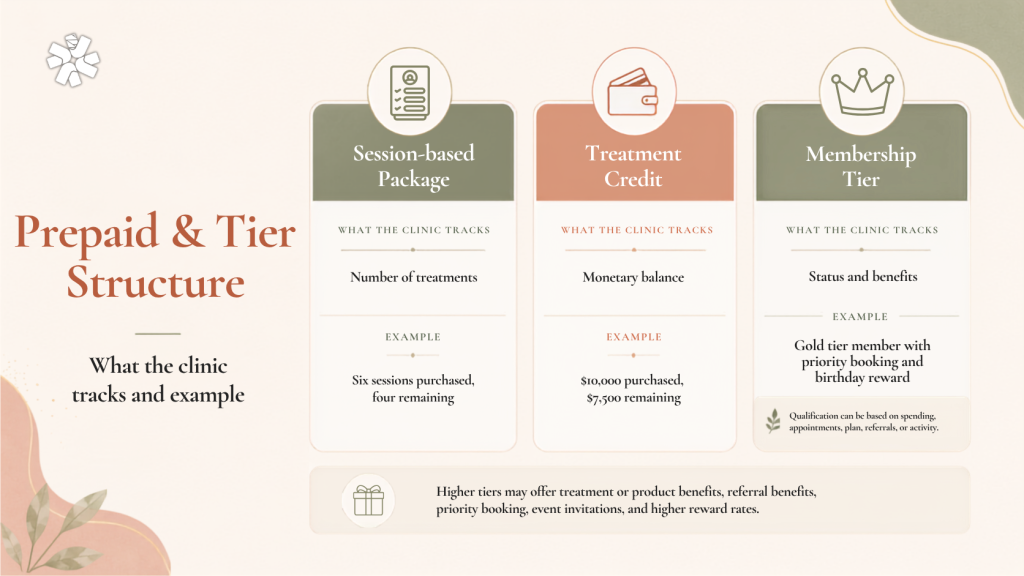
A fixed number of treatments paid for in advance, commonly for skin-treatment courses, laser programs, body-contouring courses, facial plans or maintenance programs. This is a unit-based balance: the clinic tracks sessions, not money. A session package gives the client a reason to return, but completion still depends on treatment suitability, appointment availability, service quality and the package terms.
Treatment Credit
Prepaid monetary value a client can use toward eligible treatments, useful when the client pays in advance but the specific treatment is chosen after a further consultation. The clinic should clearly state which treatments qualify, whether promotional credit follows separate rules, when it expires, and whether it is transferable or refundable.
Membership Tiers
Membership tiers track status and benefits rather than prepaid treatment value. Tier qualification may be based on eligible spending over a defined period, number of qualifying appointments, current membership plan or referrals. Higher tiers may provide treatment or product benefits, birthday and referral rewards, priority booking, event invitations and higher reward-earning rates.
A clinic can use packages to track treatment entitlements separately from membership tiers, which manage customer status and benefits.
What an Aesthetic Clinic Should Track
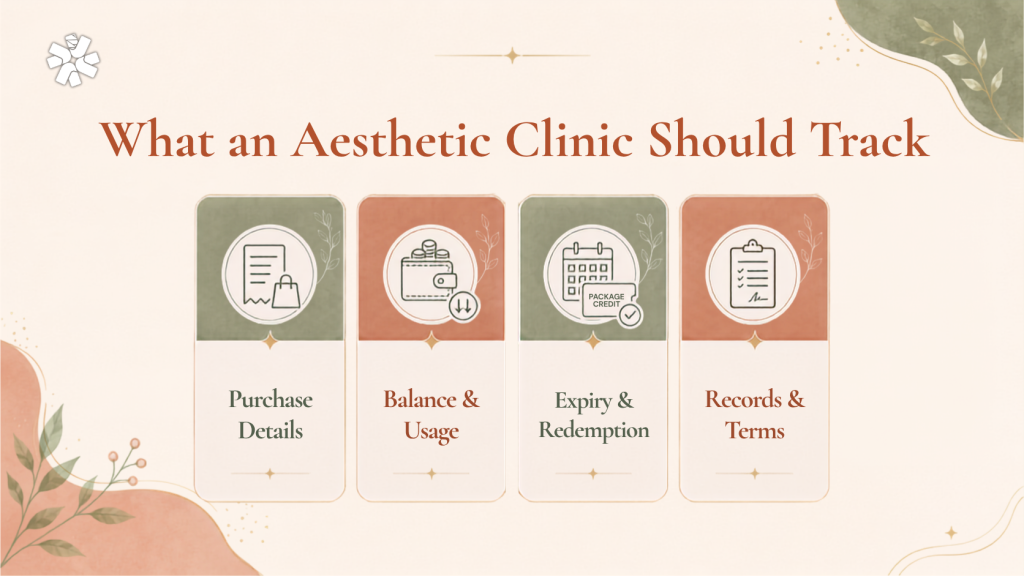
For every prepaid session package or treatment-credit sale, the clinic should be able to confirm: what the client purchased and paid, whether it is session-based or monetary, the balance added, used and remaining, start and expiry dates, redemption dates and locations, which staff member recorded each redemption, cancellation history, the terms that applied at sale, and any approved adjustments.
Common Package-Management Mistakes
Combining session and monetary balances in one record. A fixed session package should not be recorded the same way as monetary treatment credit, since one tracks units and the other tracks value.
Keeping several versions of the same balance across spreadsheets or paper cards that fall out of sync can lead to errors and confusion about a client’s remaining treatments.
Applying different rules at different locations can lead to confusion over package validity, expiry dates and membership benefits.
Giving no expiry warning at purchase, with no clear display or advance reminders as the date approaches.
Deciding refund rules too late. Before selling, the clinic should fix whether unused value is refundable, how redeemed sessions are valued, and who can approve an exception.
Disconnecting booking from package records, which lets staff overlook a valid session, book against an empty balance or miss an approaching expiry date.
Why Accurate Records Are Becoming More Important
Hong Kong has proposed cooling-off requirements for qualifying prepaid beauty and fitness contracts, including a seven-day cooling-off period and refunds within 14 days of a valid cancellation. These were still proposals as of 31 July 2026.
In Singapore, CASE recorded a 76.2% increase in beauty-industry complaints in 2025, with around two in five involving prepayment losses following sudden business closures, highlighting the risks associated with prepaid packages.
Proof: How This Works in Practice?

Industry Example: Cutis Medical Laser Clinics
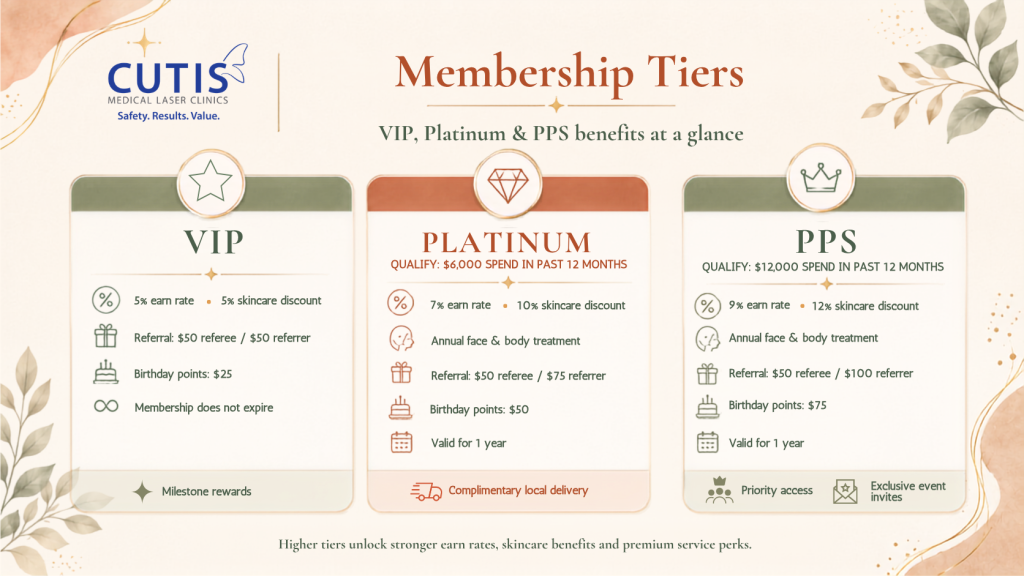
Cutis Medical Laser Clinics in Singapore operates a three-tier membership program, qualified by eligible net spending over the preceding 365 days, alongside separate prepaid-package policies. The earning rate rises from 5% at VIP to 9% at PPS, and rewards are tied to measurable actions: a sign-up bonus, a spending-milestone bonus, and referral points issued only after the referred client’s first paid visit.
Its published prepaid-package policy: a seven-day cooling-off period; used treatments deducted at standard price before refunding the balance; 12-month validity, non-transferable, with extensions due before expiry and subject to a fee; a forfeited session for late cancellation or a missed appointment; and treatment or product credit, not cash, on promotional packages refunded during cooling-off.
The lesson: Separate membership status from prepaid treatment value, tie rewards to measurable actions rather than vague loyalty, and document cooling-off, validity, extension, cancellation and refund rules before selling, not after a dispute.
Platform evidence: KlikNGo Case Studies & Demo
KlikNGo’s Pacific Coffee case study shows how an account-linked eWallet, gift cards and paid monthly subscriptions can be managed within one membership platform, and the Häagen-Dazs case study shows centralized voucher records across offline stores, e-commerce and CRM systems. These demonstrate account-linked balances, centralized records and voucher redemption at scale.
Closer to this article, the KlikNGo beauty demo shows how an aesthetic beauty clinic can present membership benefits, treatment-related rewards, prepaid value, promotions and member registration within one digital experience. Clinic owners can also explore the KlikNGo CRM Demo Page for further membership and booking campaign examples across industries.
Summary and Next Steps
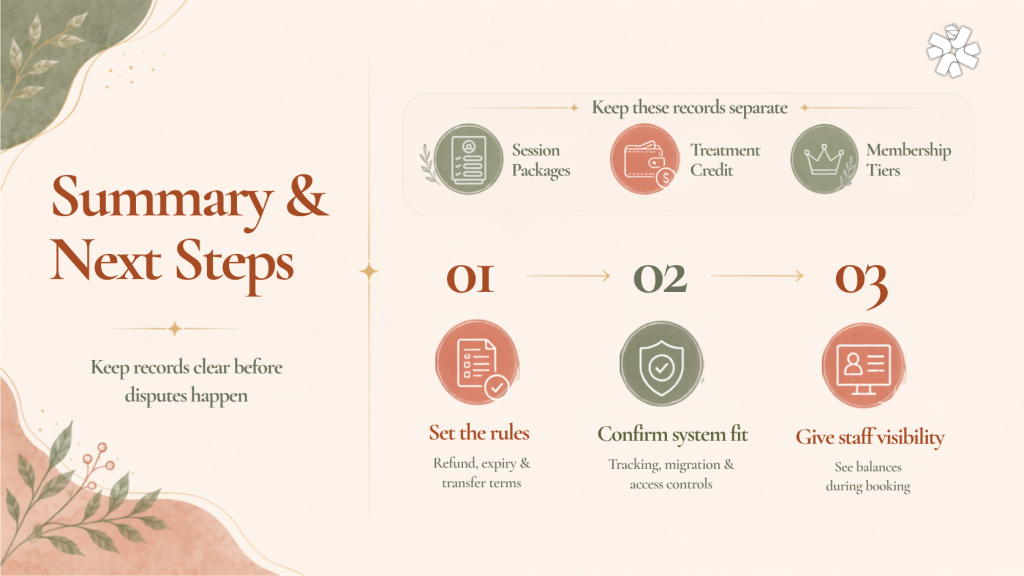
Session packages track treatment units, treatment credit tracks monetary value, and membership tiers track qualification and benefits. These are three different records to keep clear before, not after, a dispute arises.
- Document refund, expiry and transfer rules before selling any package.
- Confirm the platform can track balances, usage and expiry to the clinic’s defined policies.
- When migrating from another system, confirm which records can be imported and who has access to view, redeem or adjust a package once live.
- Make sure front-desk staff can see current balances during booking.
Clinics can review KlikNGo’s membership and voucher management functions to see how client accounts, treatment credit, rewards and voucher redemptions can be managed in one platform.
What Does Not Work
Expecting this to replace clinical software. Treatment charting, consent forms or before-and-after photos need dedicated clinical or EMR software.
Expecting software to set policy. The clinic must define the rules; the system then applies them consistently.
Expecting one system to fix cross-branch inconsistency on its own. A clear policy should be agreed first, then consistently applied by the platform.
Frequently Asked Questions
Can one client hold several treatment packages at the same time?
Yes. A client may hold different packages for separate treatments, such as laser, facial and body-contouring sessions. Each should have its own balance, validity period, redemption history and terms so staff don’t deduct from the wrong package.
How can a clinic prevent staff from deducting the wrong package?
Staff should see the package name, eligible treatment, remaining balance and expiry date before confirming a redemption. The system should record which staff member made the deduction and let authorized users correct mistakes.
How should a partial refund be calculated after some sessions are used?
The policy should explain how completed sessions are valued and whether discounts or promotional benefits are removed before calculating the refundable amount. The system records the adjustment; the clinic defines the method.
Can treatment credit be used at different clinic locations?
Yes. If the clinic allows cross-location redemption, a good prepaid credit or membership management system should give every authorised branch access to the same real-time treatment-credit balance, redemption history and expiry information, helping prevent inconsistent records or duplicate redemptions across locations.
Should appointment booking and package balances be connected?
Ideally. Staff checking eligibility and balance during booking reduces the risk of booking against an expired or used-up package. KlikNGo can connect membership and booking workflows depending on the modules configured; automatic deduction and real-time checks should be confirmed during implementation.