


In a group booking, a KTV loyalty solution may capture activity primarily under the booking holder or payer if other participants do not perform identifiable member actions. Other members may still attend without their visits, spend, rewards or interactions being attributed to their own profiles.
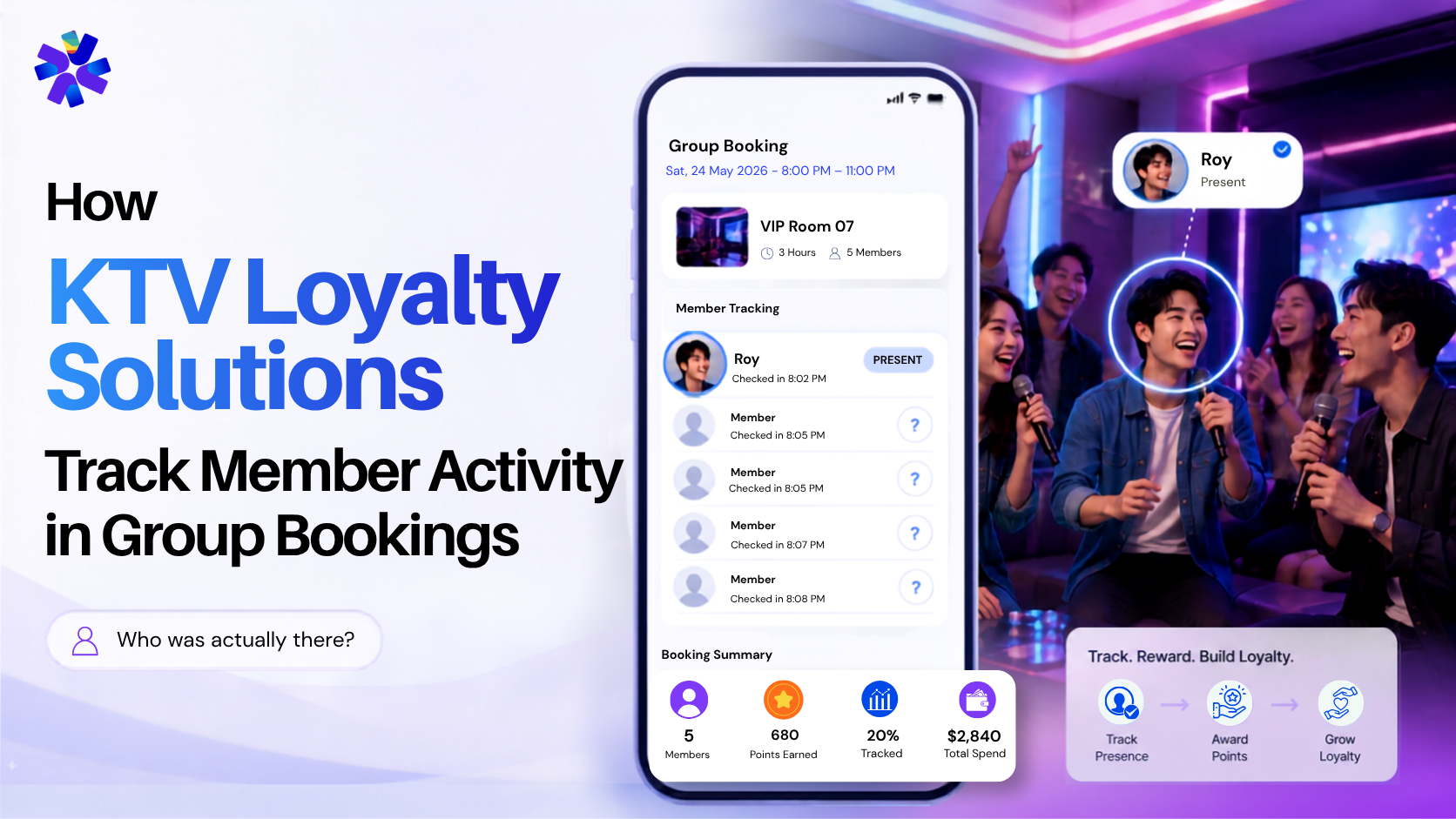
The solution is to connect the booking session with individual member actions, so participation, rewards and eligible spend can be attributed to each member profile. This gives KTV operators a clearer view of member-level activity instead of relying only on the booking holder.
Key Takeaways
- A KTV group booking can represent several customers while member activity may be recorded primarily under one person.
- The two main data gaps are understated visit frequency and unclear individual customer value.
- KlikNGo can connect booking data, member interactions and member profiles in the CRM, helping operators attribute trackable activity to individual members.
- Group missions, member scans, voucher redemption and other actions can create more trackable member activity within the same visit.
- A useful KPI for this use case is members with tracked activity per session.
What happens when one KTV booking covers a group?
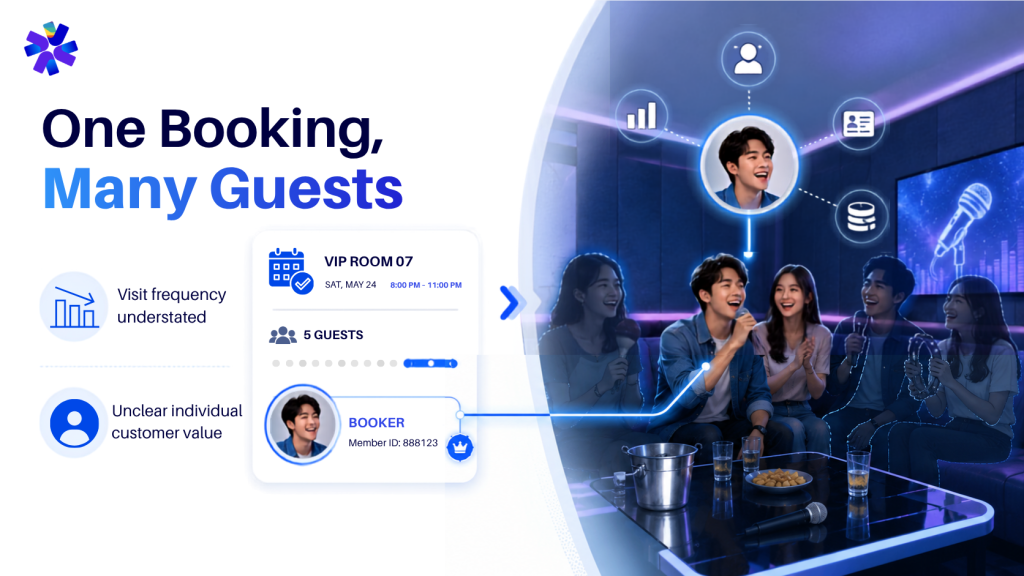
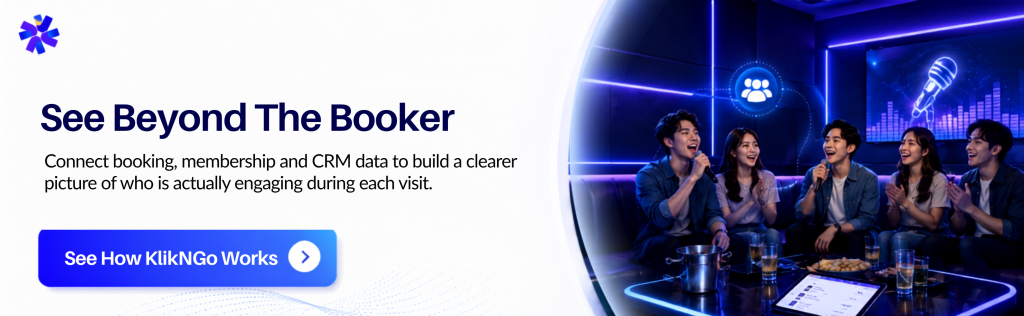
One KTV group booking can cover several people. If the booking record is linked only to the person who reserved or paid, other participants may generate little or no member-level activity unless they interact with the loyalty program individually.
This creates two main problems:
- Visit frequency is understated. A regular member who often attends as someone else’s guest may generate little or no activity under their own profile.
- Individual customer value can be unclear. A high-value room booking may involve several customers, but the booking total alone does not show how much value should be attributed to each participant.
The issue is not the booking itself. It is that one group booking can represent several customers while only some participants may generate identifiable activity in the loyalty system. For KTV and private-room karaoke venues, this can create a gap between room-level booking data and actual customer-level behaviour.
How can KTV operators track individual member activity in the same visit?
One approach is to use the booking system to create the session record, then connect identifiable actions from the membership app to the same visit. The CRM system can then consolidate those interactions under the relevant member profiles.
Members can create trackable activity through actions such as:
- Joining the session
- Scanning their member code
- Redeeming a voucher
- Completing a mission
- Making an eligible payment
When these actions are connected to the same booking session, activity from multiple members can be attributed to their respective profiles.
Layer | Role | Result |
|---|---|---|
Online Booking System | Creates the session record
| Room, outlet, date, time and booking holder are linked to one visit
|
Membership App
| Captures identifiable member actions
| More member activity can be attributed within the same session
|
CRM System
| Connects participation, rewards and spend to member profiles
| The operator gets member-level activity instead of only room-level data
|
This keeps the role of the booking record clear while allowing the loyalty and CRM layers to capture more detailed customer activity.
The KlikNGo KTV miniapp demonstrates member-facing functions designed for KTV and private-room karaoke environments without requiring users to download a native mobile app.
The broader KlikNGo membership program demo also supports features such as member profiles, rewards, wallet functions, referrals and gift cards across different industries.
Group missions in a loyalty program: The Omusubi Case
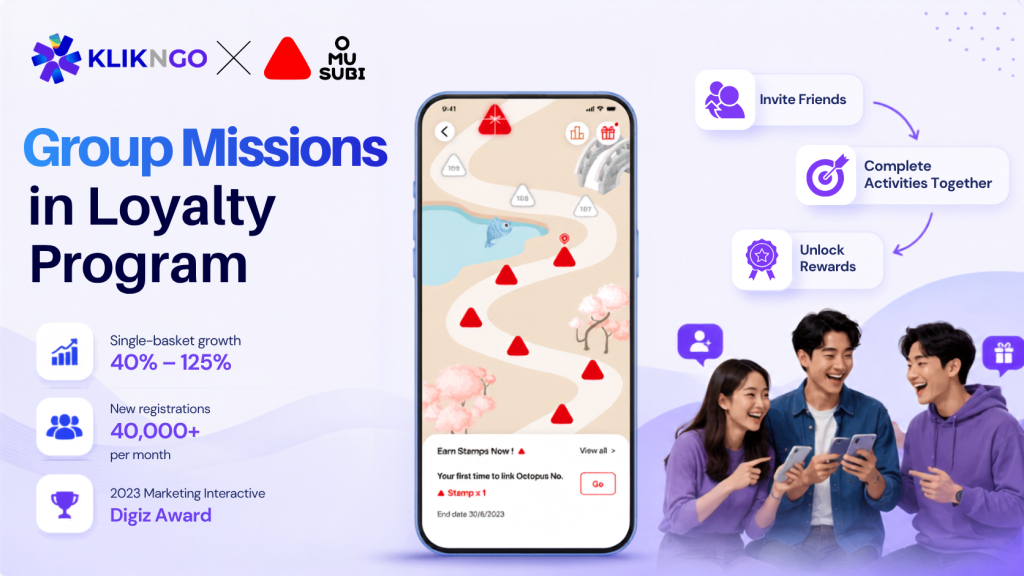
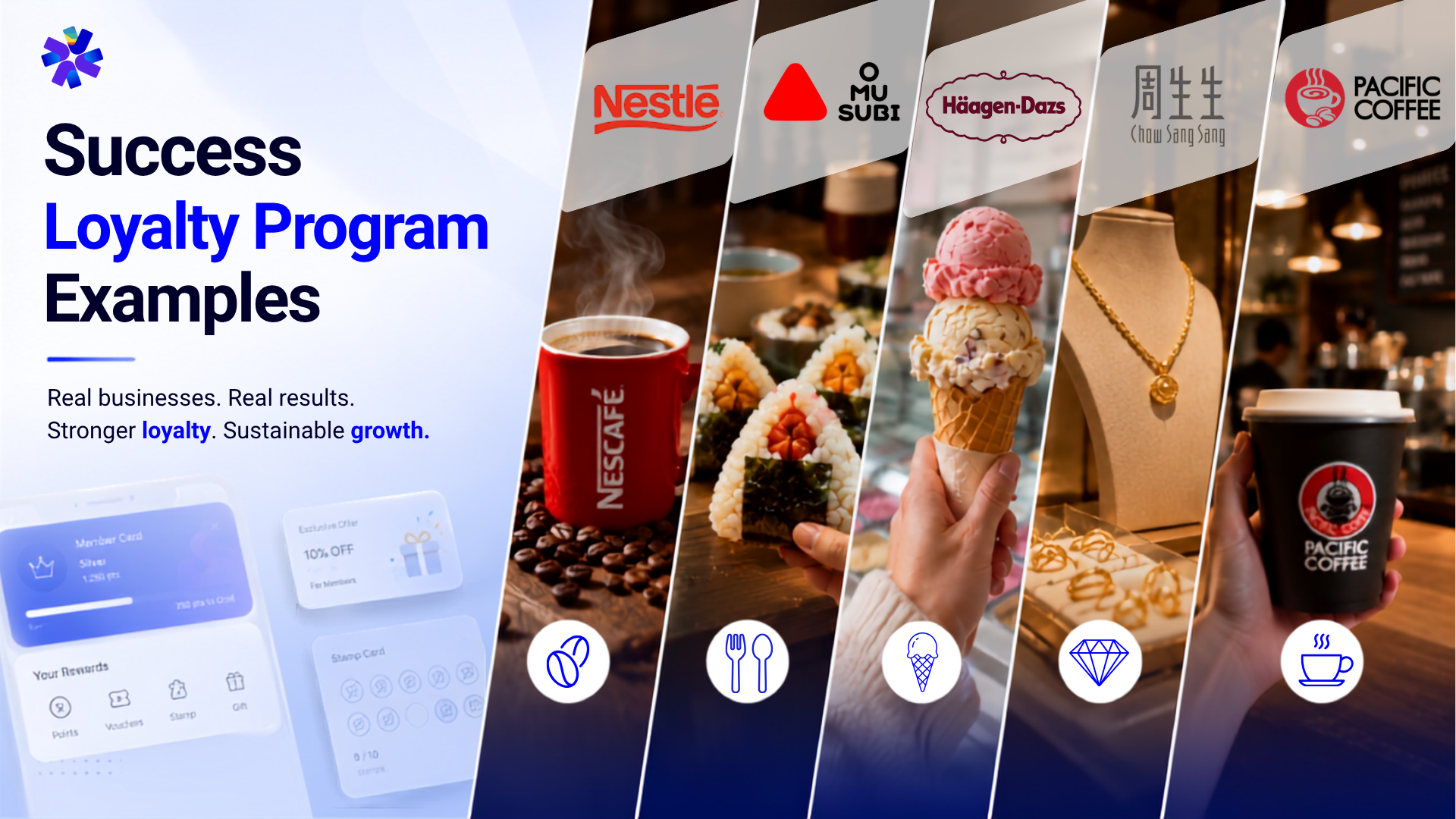
A useful precedent comes from Omusubi, where KlikNGo introduced shared group missions that encouraged members to add family and friends to their family profile or friend list through a referral program, complete activities together and unlock mission-based rewards.
Through this program, Omusubi turned shared participation into measurable engagement and commercial results. Omusubi achieved single-basket growth of 40% to 125% and more than 40,000 new registrations per month. The project also received a 2023 Marketing Interactive Digiz Award.
More broadly, loyalty programs can use missions, challenges and rewards to encourage customer participation. For KTV operators, similar mechanics could give more participants a reason to take identifiable actions during the same group visit, creating more trackable member activity.
The next step is to test whether the same approach helps increase the number of members with recorded activity in each session.
How should KTV operators measure member activity?
To measure this properly, separate the booking record from the individual member activity within the same session.
For example, Alice books one room for 3 people.
Layer | What the operator learns |
|---|---|
Booking
| Alice reserved one room
|
Participation
| Alice, Ben and Charlie completed identifiable member actions
|
Spend
| Where payments are member-linked, Ben and Charlie’s eligible spend can be attributed separately
|
Reward Activity
| Member-linked spend or actions can trigger points and personalised rewards according to program rules
|
Mission Activity
| Alice invited two members into a group mission
|
If the operator only reads the booking record, Alice appears to be the active customer. If the CRM system also receives each member interaction, activity from all 3 members can be tracked within the same visit.
A useful KPI for this use case is members with tracked activity per session. This can be defined as the number of unique member profiles with at least one attributable action during a booking session.
Compare this figure before and after introducing a new member interaction, such as a scan, mission, voucher redemption or miniapp join. This shows whether more participants are becoming visible in the CRM and generating usable member-level data.
Once more activity is being tracked, the next question is whether those records are reliable enough to use.
Where KTV loyalty solutions can still lose tracking accuracy
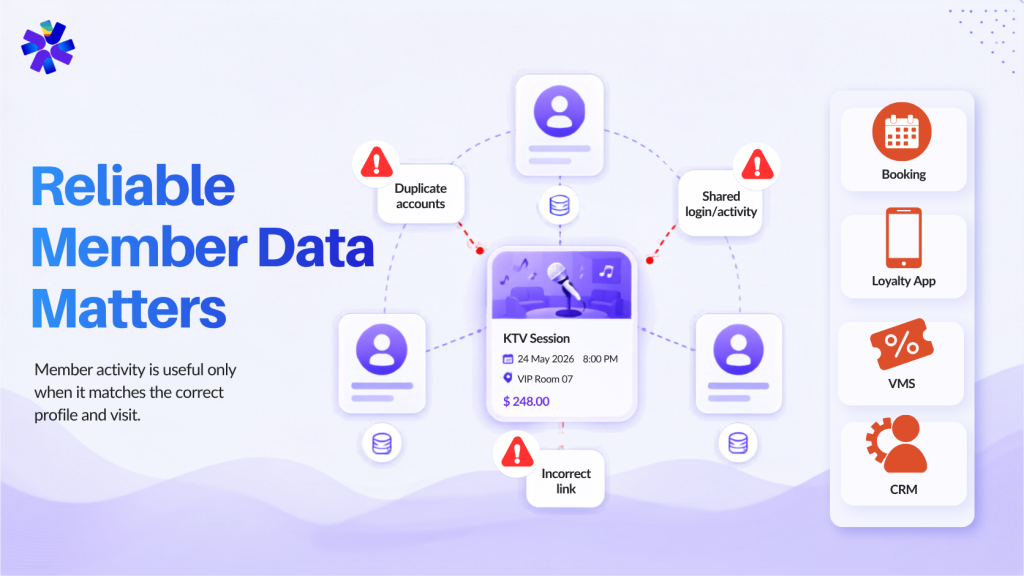
Tracking more member activity is only useful if each action is linked to the correct person and visit. This is part of the broader challenge of customer identity resolution, where identifiers and interactions from different systems need to be matched correctly to the same customer profile.
Several issues can still reduce data quality:
- Duplicate accounts
- Shared logins
- Activity recorded only at room level
- Incorrect member-to-session links
- Spend assigned to the wrong profile
These issues can distort visit frequency, individual spend, reward history and campaign targeting.
The booking system should create the visit record, while the loyalty app and voucher management system capture individual member actions. The CRM system then connects those actions to the correct member profile.
If those links are inconsistent, the operator may collect more data without getting a reliable view of actual customer behaviour.
Summary & next steps for KTV operators
Start with one question: How many members generate trackable activity within each group visit today?
Use that as the baseline. Then test one simple interaction, such as:
- A member scan
- A group mission
- A voucher redemption
- A miniapp join
- An eligible payment
Compare the result before and after the interaction is introduced. The aim is to increase trackable member activity without adding unnecessary friction to the KTV experience.
A stronger connection between the booking system, membership app and CRM system helps KTV operators move from one booking record to a clearer view of the individual customers behind each visit.